
Outdoor Event Bar Setup Checklist, Colorado Heat, Wind, Ice and Timing
Jordan Strande · March 6, 2026 · 6 min read

Outdoor bars are unforgettable—until the wind knocks over your garnish tray, the sun melts your ice, or the first thunderclap sends everyone running. This checklist is for hosts planning an outdoor wedding, corporate event, or private party who want a bar that stays cold, stable, and easy to run.
We’ll focus on setup, weather-readiness, and timing (not alcohol quantities, pricing, insurance/COI, or package selection).
Early note: If you’d rather have a pro team handle planning, setup, service flow, and cleanup, start here: premium mobile bartending.
What’s the fastest way to choose the right spot for an outdoor bar?
Pick the bar location based on stability, shade, access, and guest flow—then build weather protection around it. The “prettiest” spot is often the slowest or most fragile once the sun, wind, and crowd show up.
Use this decision table to choose a location in 2 minutes.
If you’re also planning cocktail-hour flow and line management, pair this with: cocktail hour bar plan.
What gear do you actually need for an outdoor bar setup?
A great outdoor bar is built on containment (lids, bins, coolers), stability (weights, clamps), and redundancy (extra ice, extra towels, extra light). You don’t need “everything”—you need the pieces that prevent outdoor failure points.
Outdoor bar setup checklist, host-friendly
Bar station and work surface
- Sturdy bar table/portable bar (no wobble)
- Non-slip bar mat(s)
- Back-of-bar supply table (for backup bottles/mixers)
- 2–3 bus tubs/bins (to organize bottles, mixers, tools)
Cold storage and ice management
- Separate coolers: one for drinks, one for perishables/garnishes (reduces warm-air exposure)
- Extra cooler insulation layers (towels/blankets) if it’s hot
- Ice scoop + dedicated ice bucket/bin with lid
- Backup ice plan (runner, nearby freezer, or scheduled drop)
Wind and weather protection
- Canopy/tent (if allowed) + proper weights/anchors
- Clips/clamps (for menus, linens, signage)
- Weighted menu/sign holders (avoid paper-only signs)
- Clear plastic bins with lids (for garnishes/tools)
Lighting and power
- Battery bar lights or rechargeable lanterns
- Headlamp/flashlight (for quick fixes)
- Extension cords + cord covers (only if power is needed and approved)
Cleanliness and guest comfort
- Handwashing plan: water jug + soap + paper towels (or wipes)
- Sanitizing wipes/spray + clean towels
- Trash can + extra liners + a “bar-only” recycling bin if available
- Bug control that doesn’t contaminate food/drinks (covered containers; avoid scented sprays near prep)
Signage and speed helpers
- Simple menu sign (big font)
- “Order here / pickup here” markers if lines are expected
- Water station sign (if separate) to reduce bar line congestion
If you want this fully handled—planning, setup, smooth service, and cleanup—request your premium mobile bartending proposal here.
How do you keep ice, mixers, and garnishes safe in heat and sun?
Keep anything perishable cold, covered, and out of direct sunlight, and separate “often opened” coolers from “perishables” so the garnish cooler stays cold. The goal is to reduce warm-air exposure and keep your station predictable.
Practical steps that work in real events:
- Use two coolers: beverages in one, perishables/garnishes in another. This matches federal outdoor food safety guidance for keeping cold foods in coolers with ice/gel packs and minimizing temperature abuse.
- Shade your cold storage (even if the bar looks great in the sun). Move coolers under a table, behind the bar, or under canopy shade.
- Keep lids closed and stage only what you need for the next 15–20 minutes.
- Use lidded garnish trays or covered hotel pans; wind + sun will dry citrus fast.
- Have a hydration plan for the team (even if it’s “just friends helping”). Heat safety basics still apply: water, rest breaks, and shade/cool-down space.
If you’re deciding how many people you need behind the bar to keep things moving (especially in heat), use: staffing by guest count.
How do you wind-proof your bar so nothing flies, or spills?
Treat wind like a constant: secure the canopy, lower the center of gravity on the bar, and keep your “light items” contained. If the venue is exposed (mountain overlooks, open fields, rooftops), assume gusts.
- Anchor everything: proper canopy weights/anchors, not “a couple small sandbags.”
- Contain paper: menus and signs go into weighted holders or frames.
- Use bins with lids for napkins, straws, garnishes, and tools.
- Skip tall décor on the bar (florals are great—just keep them low and stable).
Create a spill zone: keep towels and a bus tub ready so a gust doesn’t turn into a 20-minute cleanup.
How do you plan for power, lighting, and the moment the sun drops?
Plan lighting like it’s guaranteed you’ll need it. Outdoor bars often fail after sunset because nobody can see bottle labels, pours get sloppy, and the bar turns into a clutter zone.
- Battery lighting beats extension cords for most events (simpler, fewer trip hazards).
- If you must use power, route cords behind the bar and cover any walkway crossings.
- Test lighting at the same time of day as your event (sunset surprises are real).
Weather backup matters too. If you hear thunder, move people to proper shelter and pause service—no outdoor setup is worth the risk. The CDC’s lightning safety guidance is clear: “When thunder roars, go indoors,” and wait before resuming outdoor activity.
When should you set up, and when should you start breaking down?
For outdoor events, set up earlier than you think so you can adjust for sun, wind, and layout surprises. A calm bar is usually the result of a calm setup window.
A simple timing template:
- 2–3 hours before guests: build the physical station (tables, bar, canopy, lighting)
- 90 minutes before: load ice + non-perishables; set signage; confirm trash plan
- 45–60 minutes before: stage first-round garnishes + tools; fill backup bins; confirm wind-proofing
- Guest arrival: keep the station “closed-lid clean” (only active items out)
- Late-night: switch to fewer touchpoints (simpler menu, fewer garnish options) and begin consolidating bins
If your outdoor bar is part of cocktail hour and you’re trying to prevent long lines, this planning guide helps: “Cocktail Hour Bar Plan”
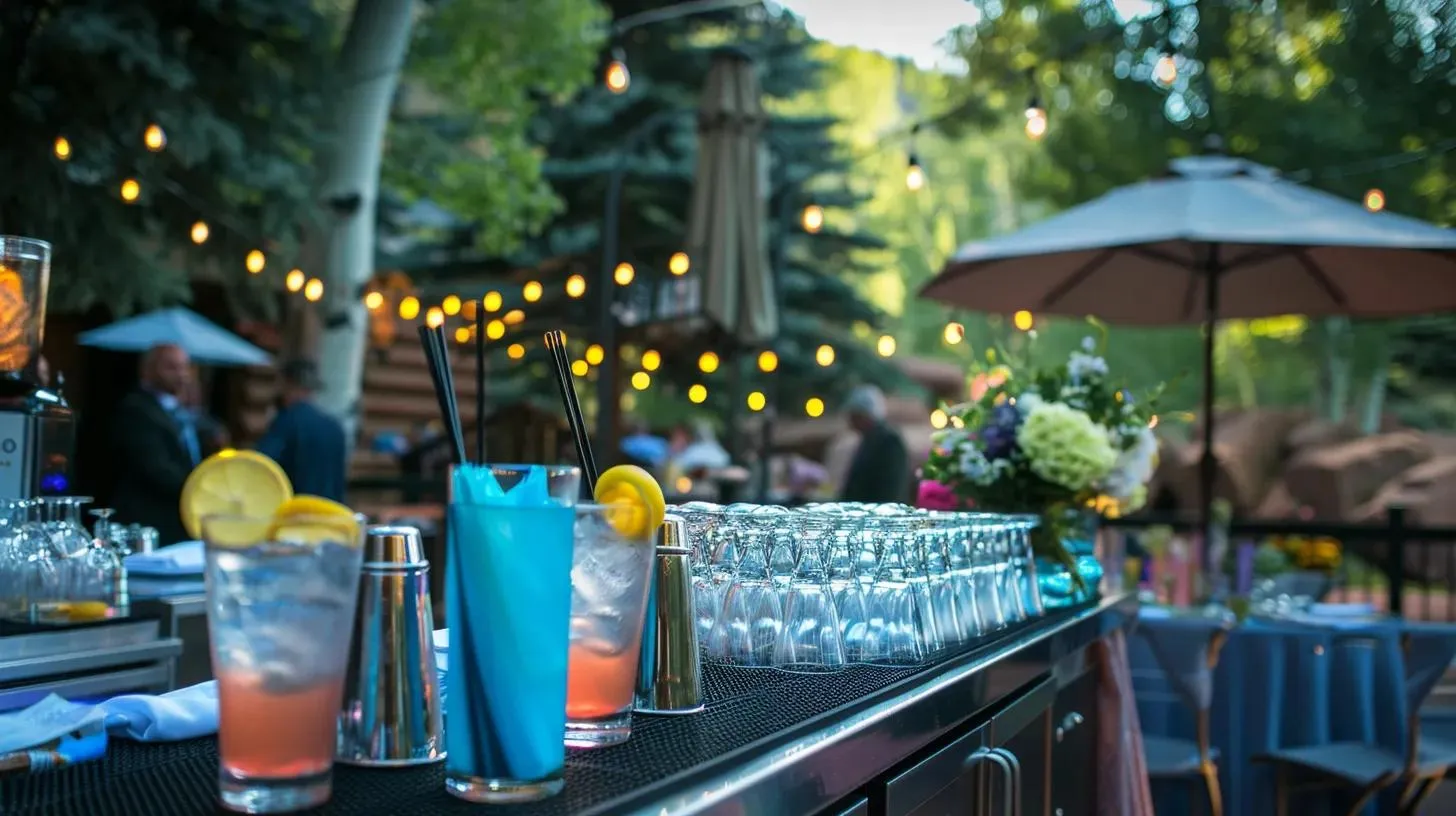
What does this look like in real life? Two mini scenarios
In real events, outdoor success is less about the drink list and more about containment + redundancy.
Scenario 1: Backyard wedding in July hot sun, no shade, limited power
You set the bar near the patio door for quick restocks and emergency indoor shelter. A canopy creates shade, and two coolers stay under the back table with towels over the lids. The garnish tray stays covered, and you stage only what you’ll use in the next 15 minutes.
Result: ice lasts longer, the bar stays clean, and you’re not sprinting across the yard every 10 minutes.
Scenario 2: Mountain venue in September wind gusts + early sunset
You avoid the overlook edge and place the bar in the lee of a building. All signage is in weighted holders, napkins live in a lidded bin, and battery lights are installed before guests arrive. You keep one “quick reset” bus tub under the bar with towels, wipes, and spare tools.
Result: gusts happen, but the bar doesn’t unravel—and after sunset the station stays accurate and polished.
What outdoor bar mistakes cause the most problems, and how do you avoid them)?
Most outdoor bar issues are predictable. These red flags are what typically turn “cute setup” into “chaos.”
- No shade plan → Ice melts fast, mixers warm, garnish dries out.
- One cooler for everything → Perishables warm up because the cooler is opened constantly.
- Unanchored canopy/tent → Safety risk and a guaranteed mid-event scramble.
- No lighting strategy → Sloppy service, slow pours, messy station at night.
- Paper signage with no weights → Blown signs, confused guests, longer lines.
- No thunder plan → People wait too long to shelter; service continues when it shouldn’t.
- No cleanup bins → One spill becomes a station-wide shutdown.
Outdoor event bar setup Frequently Asked Questions
Ready to make your outdoor bar effortless?
If you want an outdoor bar that’s planned, wind-proofed, and executed with restaurant-level polish (so you can actually enjoy your event), request premium mobile bartending here.
Or reach out directly to start planning: Contact us
Keep reading
Tell Us About Your Event
Share the date, the venue, and the guest count. A custom menu direction and proposal lands in your inbox within 24 hours.