Cocktails vs Mocktails: Designing an Inclusive Bar Menu for Modern Events
The inclusive bar menu used to be an aspiration. Now it's a baseline expectation. Modern guest lists at weddings, corporate events, and private celebrations include pregnant guests, recovering guests, designated drivers, religious abstainers, wellness-focused guests, and people who simply don't drink. Treating those guests as a problem to solve or an afterthought to accommodate doesn't work anymore. The bar program needs to be designed for everyone in the room from the start, not adapted at the edges to include the people who aren't drinking. This guide walks through what inclusive bar design actually looks like, why it matters, and how to design a menu that works for the full guest list without compromising on either side.
1. What Inclusive Bar Design Actually Means
The phrase "inclusive bar" gets used loosely. Some venues use it to mean they have a couple of non-alcoholic options available on request. That's not inclusive design. That's an accommodation. Real inclusive bar design means the non-alcoholic menu is built with the same care, ingredients, glassware, and intentionality as the alcoholic menu. The two programs run in parallel rather than the mocktail program being a stripped-down version of the cocktail program.
At the design level, inclusive means the menu architecture treats both sides as primary. If you have two signature cocktails, you have two signature mocktails. Not one mocktail and a list of three sodas. Both programs get custom design, both get scratch ingredients, both get equal presentation, both get equal naming care. The guest who isn't drinking should be able to look at the menu and see a real choice rather than a fallback.
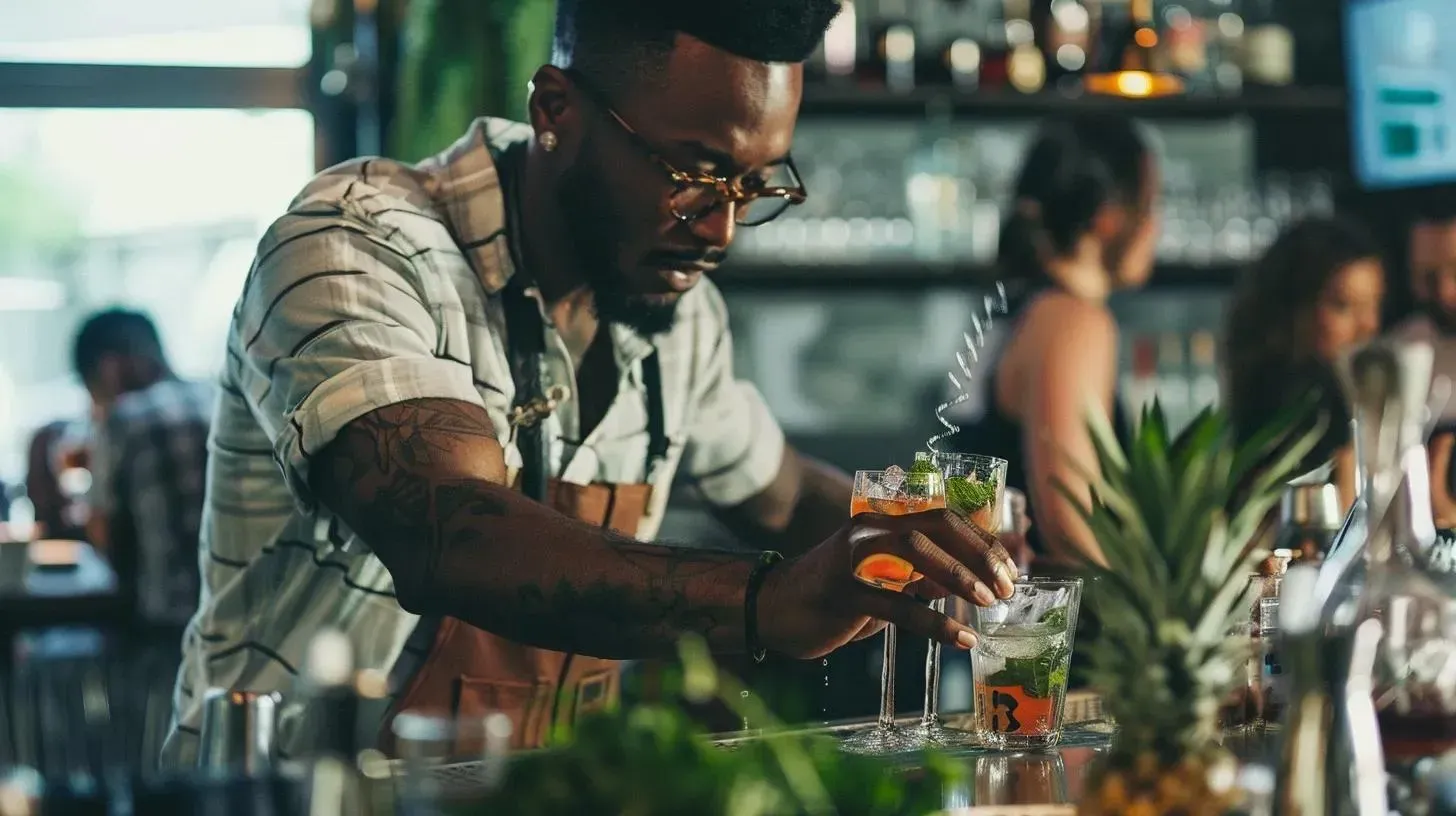
At the service level, inclusive means the bartender treats both orders with equal attention. The mocktail isn't poured faster, made simpler, or presented with less care. Same glassware, same garnish quality, same service flow. The visual experience at the bar should be indistinguishable in terms of what's getting built. The non-drinking guest doesn't get the bartender's B-game just because they're not having alcohol.
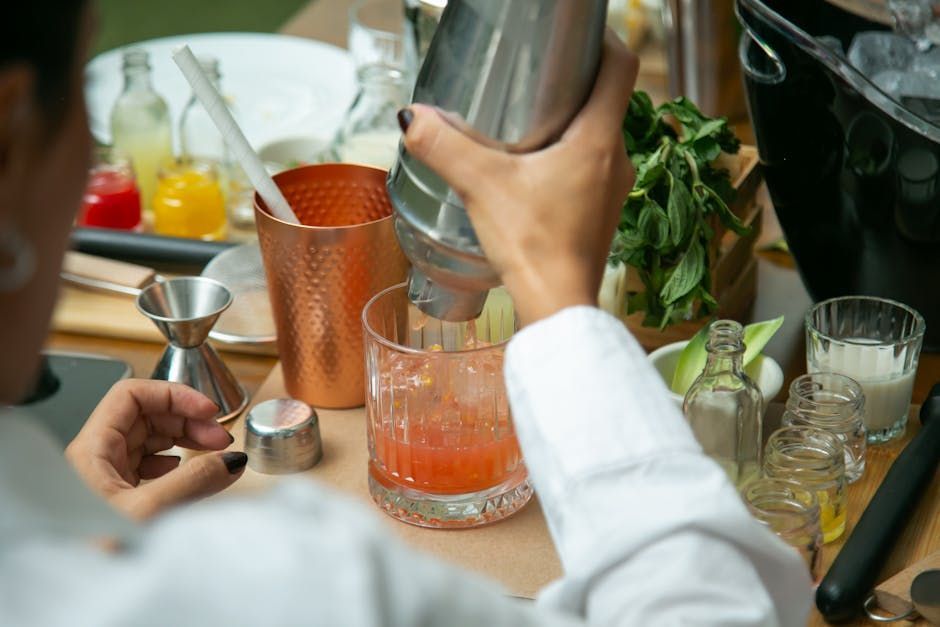
At the ingredient level, inclusive means the mocktail program uses the same caliber of ingredients as the cocktail program. Fresh-pressed citrus, house-made syrups and shrubs, quality non-alcoholic spirits, seasonal garnishes. The drink behind the bar should be as good as the drink the alcohol-drinking guest is getting in technical execution, even though the alcohol component is absent.
2. Why Inclusive Design Matters More Than People Think
The case for inclusive bar design isn't ideological. It's practical. Modern event audiences are different than they were a decade ago, and the bars that haven't updated their thinking are losing ground.
Wedding guest lists almost always include pregnant guests. The bride's sister might be five months along on the wedding day. The groom's best friend's wife might have just shared the news. These guests deserve more than soda with lime. They deserve the same level of celebratory drink design as anyone else in the room. The mocktail program is how that happens.
Recovery and sobriety have become more publicly discussed and less stigmatized. Guests who don't drink for recovery reasons appreciate when the bar treats their menu as equally important to everyone else's. Forcing the recovery guest to drink soda all night, while the bartender focuses obsessively on signature cocktails, sends a clear message about whose experience matters at the event. The right approach removes that asymmetry entirely.
Wellness culture has shifted Denver event audiences specifically. A meaningful percentage of guests at most events in the metro are wellness-aware consumers who appreciate non-alcoholic options even when they sometimes drink. These guests will alternate between cocktails and mocktails through the night. If the mocktail program isn't real, they'll just drink water all night and the event feels less polished as a result.
Designated driver dynamics shape group experiences. Couples and friend groups often pre-decide who's driving home. The designated driver shouldn't feel like they're getting punished with sub-par drinks for accepting that responsibility. A well-designed mocktail program makes the designated driver role feel less like a burden and more like a respected position.
Religious and cultural reasons for not drinking also matter. Multi-faith and multi-cultural weddings are increasingly common. The inclusive bar isn't just about wellness or recovery, it's about respecting the full diversity of why guests might not drink. Treating mocktail orders with the same care as cocktail orders signals that respect.
3. The Design Framework: Parallel Programs, Not Stripped-Down Versions
The mistake most event bars make is designing the cocktail program first and then trying to figure out what to do for the non-drinking guests. The right approach is designing both programs in parallel from the start. Here's the framework that works.
Start by mirroring the cocktail menu structure. If the cocktail side has two signatures plus beer and wine, the mocktail side should have two signatures plus equivalent alternatives. The structural symmetry matters because it tells guests that the non-alcoholic side was thought through.
For each cocktail signature, design a paired mocktail that occupies the same flavor space. If the cocktail signature is a bourbon-forward old fashioned variation, the paired mocktail uses a non-alcoholic whiskey alternative with similar spice and depth notes. If the cocktail signature is a citrus-forward gin gimlet, the paired mocktail uses similar citrus and herb notes. The pairing isn't always literal, but the flavor logic should connect.
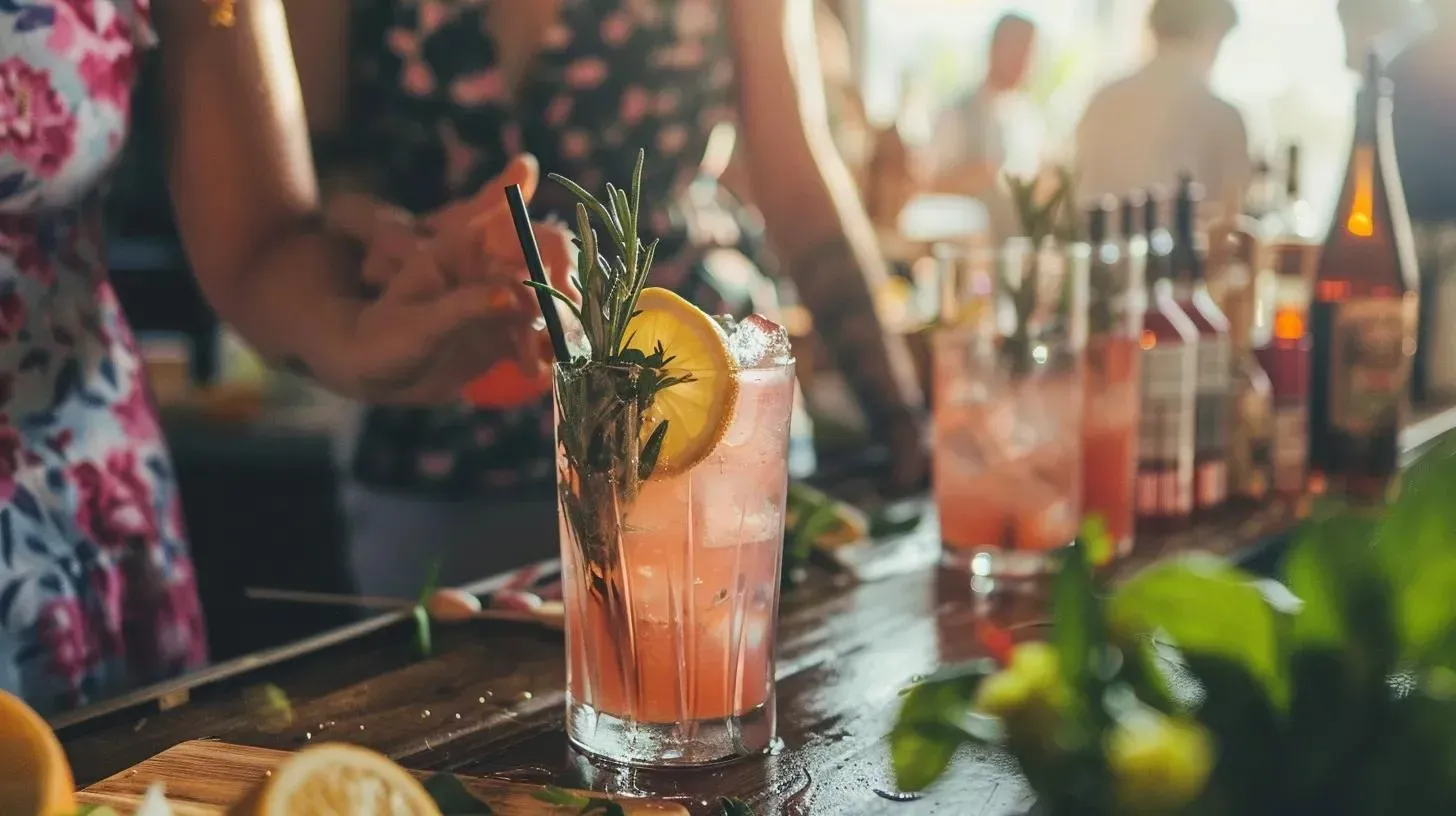
Use the same glassware across both menus. The mocktail guest gets the same coupe, rocks glass, or Collins glass that the cocktail guest gets. This is a small detail with disproportionate impact on how the drink experience feels. A premium mocktail served in a plastic cup tells the guest the bar didn't take the order seriously.
Match the garnish quality between programs. The mocktail gets the same expressed citrus peel, the same fresh herb sprig, the same brandied cherry. Garnish quality is one of the most visible signals of how seriously a drink was taken. Treating mocktails like they don't deserve garnishes is a major tell.
Name both programs with the same intentionality. If the cocktail signatures have meaningful, story-driven names connected to the event, the mocktails should too. The mocktail named "The Boulder Garden" sits naturally alongside the cocktail named "Front Range Old Fashioned." The mocktail named "Non-Alcoholic Spritzer" doesn't.
4. Specific Pairing Approaches That Work
Here are five specific pairing approaches that demonstrate how cocktail and mocktail signatures work together at events. Use these as design templates or adapt the patterns for your specific menu.
The Spirit-Forward Pair: Cocktail is a Bourbon Apple Old Fashioned with maple syrup and allspice bitters. Mocktail is a Non-Alcoholic Whiskey Old Fashioned using Lyre's or Ritual Whiskey Alternative, apple-infused maple syrup, and allspice bitters. Both built in a rocks glass over a single large ice cube with a wide-cut orange peel garnish. The mocktail captures the same warm, deep, spice-forward profile without the alcohol.
The Garden Pair: Cocktail is a Cucumber Basil Gin Spritz with London Dry gin, fresh basil, cucumber, lime, and sparkling wine. Mocktail is a Cucumber Basil Mocktail Spritz with Seedlip Garden 108, fresh basil, cucumber, lime, and non-alcoholic sparkling wine alternative. Both built in a wine glass over ice with cucumber ribbon garnish. The mocktail delivers nearly the same sensory experience.
The Smoky Pair: Cocktail is a Mezcal Margarita with fresh grapefruit, lime, and smoked salt rim. Mocktail is a Smoky Mocktail Margarita with non-alcoholic agave spirit, fresh grapefruit, lime, smoked salt rim, and a dash of liquid smoke or smoked water to capture the mezcal energy. Both served in a coupe glass. The smoky note is what makes this pairing work.
The Bright Citrus Pair: Cocktail is a Vodka Lemon Drop with fresh lemon, simple syrup, and sugar rim. Mocktail is a Lemon Cordial Sparkler with house-made lemon cordial, fresh lemon, sparkling water, and sugar rim. Both served in a coupe. The mocktail version is bright, refreshing, and clearly its own drink while staying in the same flavor neighborhood.
The Coffee Pair: Cocktail is a classic Espresso Martini with vodka, coffee liqueur, espresso, and three coffee beans floating on top. Mocktail is a Bourbon-Style Cold Brew Mocktail with cold brew concentrate, oat milk, vanilla syrup, a dash of bitters, and cocoa-dusted foam on top. Both served in a coupe with the same three-bean garnish. The mocktail version doubles as a dessert drink.
5. The Service-Level Decisions That Make or Break Inclusion
Designing the menu is the easy part. The service-level decisions are where inclusive bar programs succeed or fail. Most bartenders haven't thought about these patterns explicitly, but they shape the guest experience in significant ways.
The mocktail order shouldn't go to the back of the queue. Bartenders sometimes prioritize cocktail orders because they perceive mocktails as simpler or less time-sensitive. That perception leaks into the guest experience. The right approach is treating every order with the same queue priority based on order time, not drink type.
The mocktail shouldn't take less time to make. If the bartender pours a cocktail with measured shake counts and careful presentation, then makes the mocktail in 15 seconds with a quick stir and dump, the guest notices. The execution time should be similar even if the techniques differ slightly.
The mocktail order shouldn't get explained or apologized for. Bartenders sometimes say things like "this is just a mocktail" or "I made it the best I could without alcohol." That language signals the bartender doesn't think the mocktail is a real drink. The right framing is treating the mocktail as a signature drink in its own right, named and described with the same confidence as the cocktail.
The visual presentation should match across both menus. The garnish placement, the napkin handoff, the glass positioning, all should be identical. The drink should arrive at the guest with the same level of presentation regardless of whether it has alcohol.
Guests should be able to switch between cocktails and mocktails through the night without it being awkward. Some guests will start with a cocktail, switch to a mocktail for the dinner course, then come back to a cocktail for dessert. That pattern should be normal and expected, not commented on. The bar should make it easy.
6. How to Talk About the Inclusive Bar With Vendors and Venues
Most couples and event planners don't know how to articulate what inclusive bar design looks like when they're hiring vendors. Here's the language that works to communicate the expectation and identify vendors who can deliver it.
Ask vendors directly: "How do you approach mocktails for guests who aren't drinking?" The answer tells you everything. Real vendors will talk about designed programs, custom signatures, ingredient parity, and presentation matching. Other vendors will mention sodas, juices, and "options available on request."
Ask to see photos of past mocktail work specifically. Many bartenders have great cocktail photos but no dedicated mocktail content. That gap signals where the attention goes. The vendors who treat mocktails as a serious category have photos to prove it.
Discuss the guest list demographics with the vendor upfront. If you know you have multiple pregnant guests, several non-drinking family members, or a wellness-aware audience, share that. A real inclusive bar program calibrates to the actual guest list rather than running a generic non-alcoholic option.
Confirm that mocktails are included in the proposal pricing rather than treated as an add-on. Vendors who price mocktails as extras are signaling that they consider them outside the main bar program. That's not inclusive design. Inclusive design means mocktails are baseline.
Ask about the mocktail menu design process. A real vendor will offer to design custom mocktails for your event the same way they design custom cocktails. A template-based vendor will hand you a list of three pre-set mocktails to choose from. The custom design conversation is the right indicator.
Conclusion
Inclusive bar menu design isn't a fringe consideration anymore. It's the new baseline for any event that takes the full guest list seriously. The parallel-programs approach (cocktails and mocktails designed together with equal care, ingredients, glassware, and presentation) delivers an experience that works for everyone in the room without compromising on either side. The framework matters more than the specific drinks: when you treat the mocktail menu as a designed program rather than a fallback, every guest gets the same level of intentionality.
At Make It a Double, our Cool as a Cucumber sub-brand was built specifically around this approach. Every event we work includes a mocktail program designed with the same care as the cocktail program, by default rather than on request. Planning a Denver event and want a bar program that works for your full guest list? Share your event details and we'll deliver a custom parallel-program proposal within 24 hours. Learn more about artisan mocktail experiences , premium mobile bartending , or our complete service lineup.