How to Host a Mixology Class at Your Office or Venue Without Chaos

Hosting a mixology class at your office or venue can feel easy and polished when the setup matches the format. The biggest wins usually come from simple things: the right room, enough work surface, a clear run-of-show, and a class structure that fits your group instead of fighting it. This guide focuses on how to host the experience smoothly so guests can participate comfortably and the event feels organized from start to finish.
If you are looking for a hands-on experience designed to be fun, polished, and easy to host, start with our Interactive Mixology Education page here.
What does a smooth office or venue-hosted mixology class actually need?
A smooth hosted class usually needs four things: a private or semi-private space, enough surface area for people to work comfortably, a simple room flow, and a format that matches the group size. When those basics are in place, the experience feels interactive without becoming messy or cramped.
In practice, the room does not need to look like a full bar. It just needs to support the class. People need space to see the instructor, set down tools and ingredients, and participate without bumping into each other or blocking the rest of the event.
The best setups usually share a few traits:
- A room where guests can focus without competing with a loud parallel event
- Tables, counters, or another stable work surface people can actually use
- Easy access for setup and breakdown
- A simple place for the instructor to demonstrate and lead the room
- Enough breathing room that the class feels social, not crowded
That is why office conference rooms, common areas, hotel meeting rooms, private dining rooms, and some larger home venues tend to work better than a beautiful but tight space with no usable surfaces.
Which room setup usually works best for a mixology class?
The best room setup depends on how interactive you want the class to feel and how many people are participating. A room that looks impressive is not always the room that runs best.
| Room setup | Best when | Why it works | Watch for |
|---|---|---|---|
| Conference room or meeting room | You want a clean, structured corporate feel | Tables and seating are already in place, and the room usually gives people a clear focal point | Rooms can feel too rigid if the layout is cramped or the tables cannot be adjusted |
| Open office common area | You want a relaxed, social energy and easy access for staff | It feels approachable and often supports mingling before or after the class | Noise, foot traffic, and parallel activity can make the class feel scattered |
| Office kitchen or breakout area | You want a casual team experience for a smaller group | The space often feels natural for a hands-on activity and can be easy to host | It can become tight quickly if too many people are crowding around one area |
| Private dining room or hotel event room | You want a more polished private-event feel | The room is usually easier to control and can support a smoother run-of-show | Venue rules, access windows, and room turnaround timing need to be clear |
| Outdoor or mixed indoor-outdoor space | You want a seasonal or high-energy atmosphere | It can feel memorable and social when the weather cooperates | Wind, temperature, lighting, and unstable work surfaces can turn simple steps into friction |
A good rule is to choose the room that makes participation easiest, not the room that only looks best in photos.
How should the room flow and class format work together?
The room flow should make the class easy to follow from the moment guests arrive. People should know where to gather, where they will work, and where the instructor is leading from without needing a lot of explanation.
Give the instructor one obvious focal point
Guests should not have to search for where the class begins. Whether it is the front of the room, one end of a conference table layout, or a central demo station, the room needs a natural place where attention gathers first.
Make sure every participant has a real work surface
Hands-on classes feel much smoother when people have a place to set tools, ingredients, and finished drinks. Standing shoulder to shoulder with nowhere to work is one of the fastest ways to make the event feel chaotic.
Keep movement simple
The more people need to cross the room, squeeze around furniture, or share one tiny station, the harder it is to keep momentum. A class works best when guests can stay anchored in a comfortable place and still follow along easily.
Build for inclusivity from the start
If your group includes non-drinkers, daytime guests, or a mix of comfort levels, the format should reflect that before the event begins. Cocktail-and-mocktail or mocktail-first participation tends to feel much more natural than improvising around those needs in the room.
If you want a hosted class with a polished run-of-show and format options that fit offices, venues, and private events, you can explore our Interactive Mixology Education page here.
What timeline keeps the event feeling organized instead of dragged out?
The best hosted classes usually have a clear beginning, middle, and finish. A focused class feels energizing. A class that runs too long or starts too slowly can make guests feel like they are waiting for the real event to begin.
For many office and venue-hosted groups, a shorter, well-paced format works better than trying to stretch the class into the entire evening. The goal is to keep the experience interactive while leaving room for arrivals, conversation, photos, or the next part of the event.
A simple rhythm often works well:
Start with a quick welcome and orientation
Guests should know what they are making, how the class works, and what kind of participation to expect right away. This reduces hesitation and helps quieter guests settle in faster.
Move into guided instruction before attention drops
The best time to teach is early, before side conversations take over the room. Once people understand the flow, the event usually becomes easier and more social.
Keep the builds focused
A shorter menu usually creates a better class. When there are too many variations, too many steps, or too many ingredients, the room slows down and the energy breaks.
Leave space for a natural wrap-up
A mixology class should not end abruptly. It helps to leave a little room at the end for a final sip, quick photos, or casual conversation before guests move on.
If your event is more about open mingling and fast beverage service than a guided activity, our corporate event bar setup guide can help you think through whether a hosted bar format is the better fit.
What should the host confirm before the event date?
Most office and venue problems are avoidable when the host confirms a few practical details early. The goal is to remove surprises before the day arrives.
Use this checklist:
- Confirm the true participant count, not just the overall guest count
- Confirm the room layout and whether furniture can be moved if needed
- Confirm what work surfaces guests will actually use
- Confirm arrival, setup, and breakdown access times
- Confirm whether the format is cocktails, mocktails, or a mixed experience
- Confirm whether the provider is bringing tools, ingredients, and supporting materials or whether anything is host-supplied
- Confirm the class run time and how it fits with arrival, food, speeches, or other agenda items
- Confirm whether the room will stay private enough for guided instruction
- Confirm lighting, temperature, and basic comfort, especially for evening or outdoor events
- Confirm guest considerations such as sober-friendly participation, lower-sugar options, or all-ages involvement
A good hosting plan usually feels simple because the details were handled before guests ever walk in.
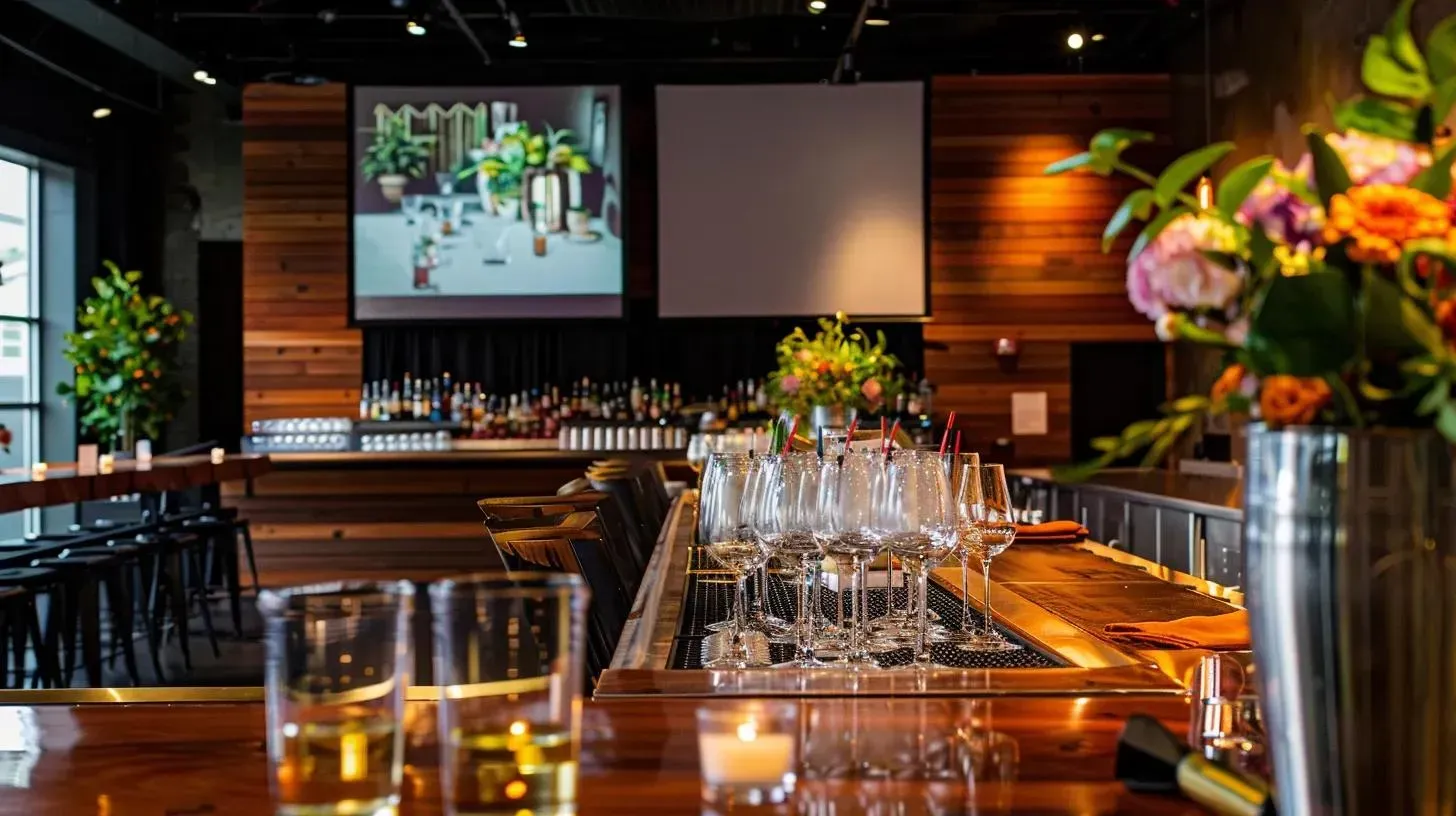
What does a strong office or venue setup look like in real life?
The same class can feel polished in one room and awkward in another. What changes the outcome is usually planning, not personality.
Scenario 1: Office team event in a conference room
A 22-person team wants a hands-on class after an afternoon workshop. The conference room works well because participants already have table space, the room has a clear focal point, and the class can start with a short welcome before moving into guided participation.
What makes it work is that the room supports the format. No one is guessing where to stand or where to set anything down.
Scenario 2: Private venue with a social, mixed group
A company books a hotel meeting room for a client-facing event and wants a class that feels interactive but still polished. The room is arranged with enough surface space per guest, a simple demo area at the front, and a class format that keeps the menu focused so the room does not get bogged down.
What makes it work is that the event feels intentional. Guests can participate comfortably, and the class finishes with time to mingle rather than ending in a rush.
What usually creates chaos during a hosted mixology class?
Chaos usually starts before the first drink is built. The most common problem is choosing a room or format that does not match the way people will actually participate.
Common mistakes and red flags include:
- Picking a room for appearance instead of usability
- Underestimating how much surface area people need to work comfortably
- Running the class in a space with too much noise or foot traffic
- Trying to fit too many people into a small room because the headcount technically fits
- Choosing a menu that is too complex for the time window
- Treating mocktails or non-drinker participation like an afterthought
- Scheduling the class into an agenda that is already too tight
- Forgetting to confirm setup access, room reset timing, or breakdown expectations
A well-hosted class should feel guided and social, not crowded and improvised.
Frequently Asked Questions
Can you host a mixology class in a conference room?
Yes. Conference rooms often work well because they usually provide stable work surfaces, a clear focal point, and a more controlled environment for guided participation.
Does a mixology class need a full bar setup?
No. A hosted class does not need to function like a full-service bar. It needs enough room, work surface, and a clean setup that supports instruction and participation.
Is an office common area a good place for a class?
It can be, especially for relaxed team events. The main question is whether the space will stay comfortable, usable, and free from too much noise or interruption while the class is running.
What if part of the group does not drink alcohol?
That is usually easy to plan for when the format is designed intentionally. Cocktail-and-mocktail or mocktail-first participation tends to keep the experience inclusive without making anyone feel like the backup plan.
Next step
If you want a hands-on mixology experience that is easy to host at your office, venue, or private event space, explore our Interactive Mixology Education page here.
Ready to talk through your room, guest count, and event format? Contact us here.